


Martijn Kirghof
Specialist
I would be happy to tell you more about TheTransitionCompany and what we can do for you. Please feel free to contact me.
Contact


Lacteolus is a silage additive and protectant that helps dairy farmers keep their silage stable and get more out of their forage. Lacteolus combines selected lactic acid bacteria with acetic acid-producing bacteria and PBC components. This formulation provides controlled, stable fermentation while actively suppressing unwanted microorganisms. Lacteolus therefore not only protects silage but also actively inhibits moulds and Clostridia. This helps preserve proteins and feed value, resulting in more stable silage, less feed loss and a more consistent ration.
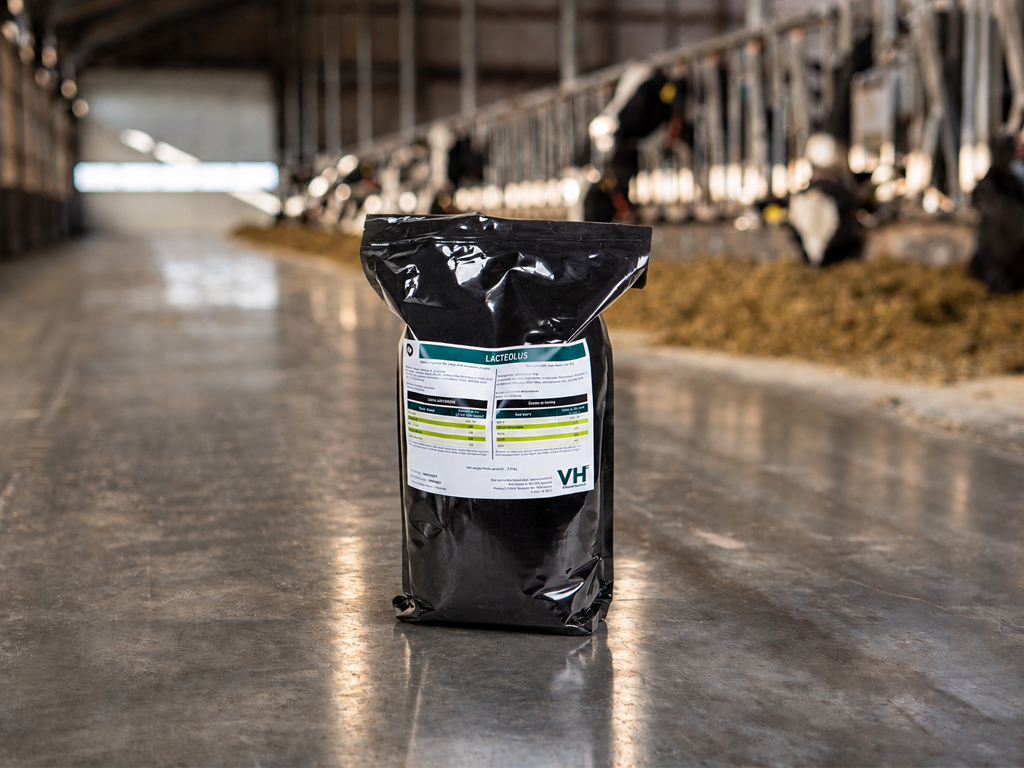
Lacteolus is a biologically controlled fermentation system with a unique dual action. This silage protectant goes beyond treating symptoms: it provides control over the entire system and inhibits or neutralises Clostridia. Lacteolus is therefore more than just a silage additive.
Some plants contain PBCs (Plant Based Components), also known as quinones, which provide natural protection against Candida and Clostridia. These quinones have beneficial and anti-inflammatory properties and protect true protein.
Lacteolus activates these quinones and combines PBCs with selected lactic acid bacteria and acetic acid-producing bacteria, suppressing moulds and bacteria. It also protects proteins in the feed, allowing cattle, sheep and goats to utilise forage more efficiently.
Simply dissolve Lacteolus in water for use with dosing equipment during ensiling. We recommend the following dosage:
| Grass | 30-35 grams per tonne of fresh material |
| Maize | 20 grams per tonne of fresh material |
| Legumes | 35 grams per tonne of fresh material |
| CCM | 40 grams per tonne of fresh material |
| Whole-crop cereal silage | 25 grams per tonne of fresh material |
With Lacteolus, cows not only receive higher-quality forage but can also get much more out of it. That means better performance and more milk!


Are you interested? Feel free to contact us. We would be pleased to look at the possibilities for tailor-made advice.
Read more