

Martijn Kirghof
Specialist
I would be happy to tell you more about TheTransitionCompany and what we can do for you. Please feel free to contact me.
Contact


Sometimes you notice signs in the herd that you cannot quite put your finger on.
Fertility is below expectations, somatic cell counts are elevated, milk yield declines or the amount of leftover feed suddenly increases. These are not clear signs of deficiencies, yet something is not quite right. There is a good chance that Clostridia are involved.
Clostridia are harmful bacteria that enter the gastrointestinal tract of ruminants through forage. Once in the rumen and intestines, they multiply rapidly, displacing beneficial, healthy bacteria.
This excessive bacterial growth allows exotoxins to enter the body and damage the intestines. The bacterium Clostridium perfringens is a clear example. It can cause severe intestinal inflammation and leads to poisoning originating in the intestines. Ultimately, the entire digestive system is affected, resulting in long-term subclinical harm and economic losses.
Is important to watch for the following signs:
These symptoms may appear to be isolated problems, but they are often the result of an underlying Clostridia outbreak in the gastrointestinal tract.
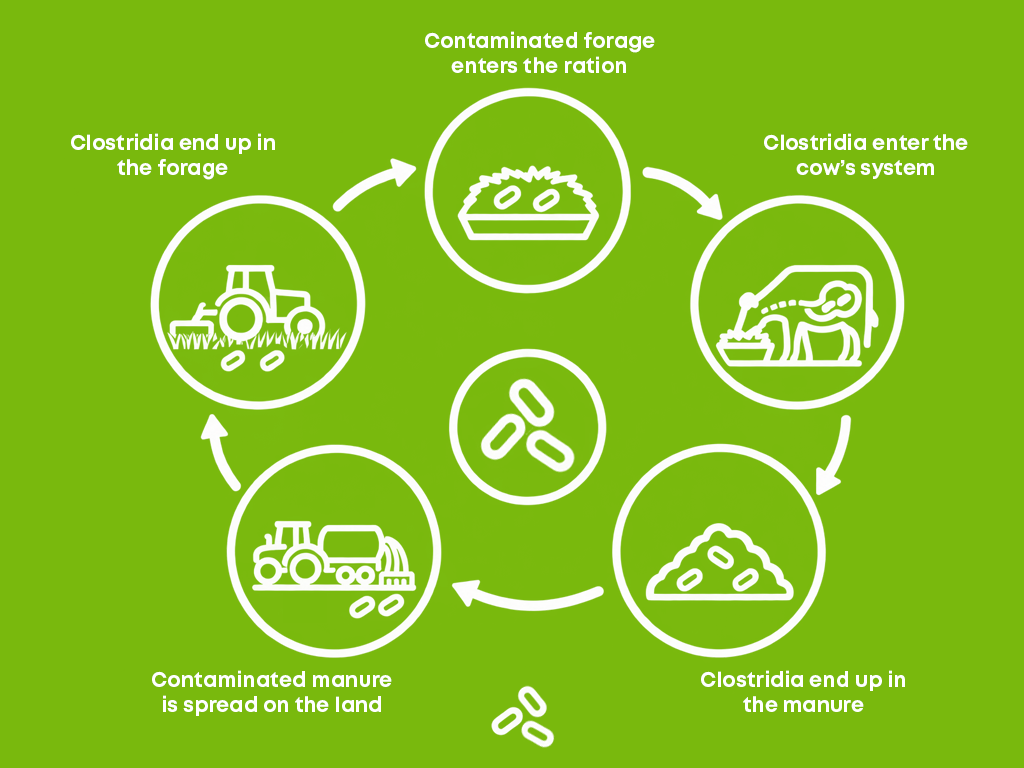
Clostridia grow mainly in low-oxygen conditions and form spores that can survive in the environment for a long time. A sudden change in ration can promote their multiplication. These harmful bacteria also remain in circulation through manure. Conventional silage additives can do little to address this, partly because Clostridia thrive and grow at a pH of 4–4.5. The problem therefore needs to be tackled at its source to prevent the bacteria from returning to the cow via the land and causing repeated contamination.
Prevent recontamination
Using a silage protectant during ensiling helps inhibit the growth of Clostridia during the ensiling process itself. A silage protectant such as Lacteolus contains natural PBCs that suppress moulds and bacteria. It also protects proteins, helping preserve optimal feed value. This prevents recontamination and breaks the cycle for the following year, when the silage is fed.
Controlling acute infection
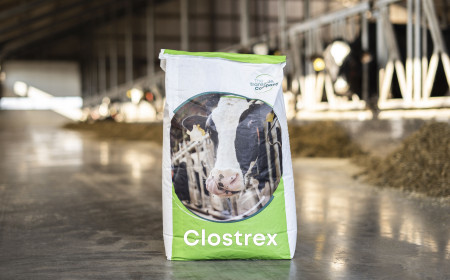
A feed additive that helps suppress acute infection is also crucial to limiting longer-term consequences. Clostrex is one such aid. It helps inhibit the growth of Clostridia from within, lower the pH and restore the intestinal lining. Clostrex contains Lactobacillus species, polyphenols, essential oils and yeast by-products, giving the intestines a chance to recover. By adding Clostrex to the ration, you will notice tangible results within a few weeks, such as fewer cases of inflammation, increased water intake and improved feed efficiency.
This allows the immune system to function optimally again.
If in doubt, always contact one of our specialists. They can help develop an effective treatment plan and involve a veterinarian if desired.
Want to learn more about Clostrex or Lacteolus? Feel free to contact us for more information!
